
Chapter 11 - Immunity
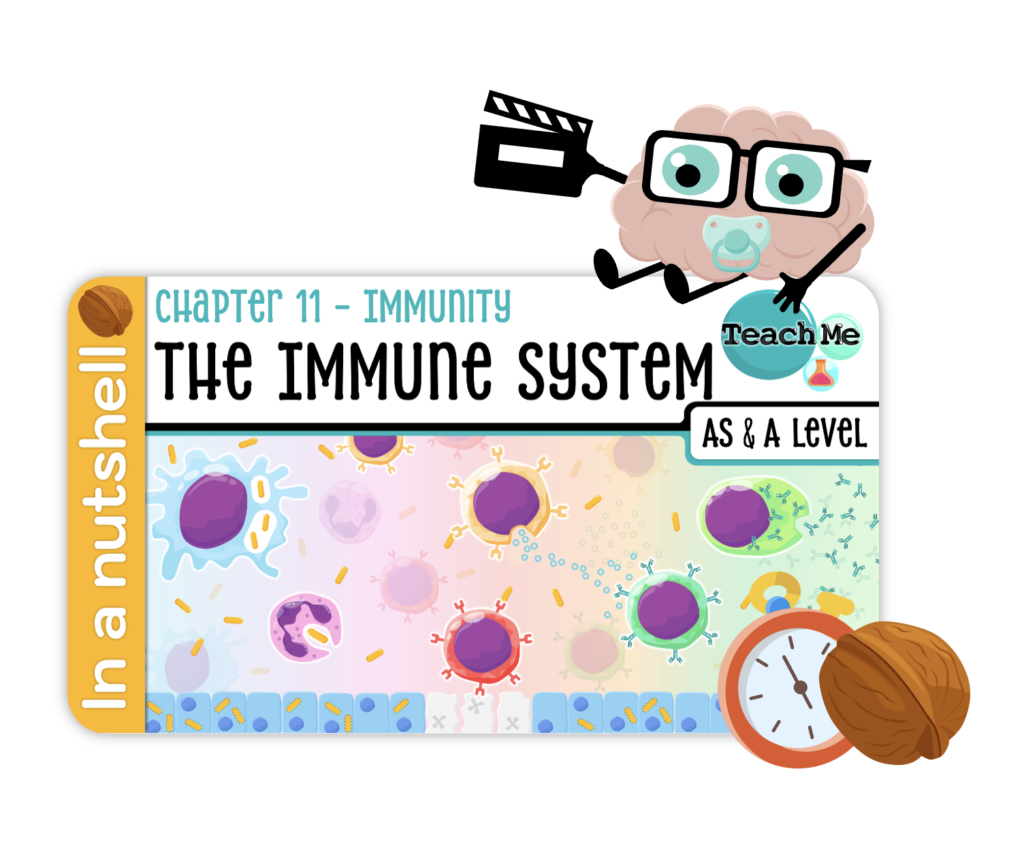
Section 1 - The Immune System
LECTURE VIDEO
DESCRIPTION
Your body is under constant attack. Bacteria, viruses, fungi, parasites—they’re all trying to get in, and they don’t knock. Fortunately, you’ve got an entire military operation running 24/7 inside you, complete with bouncers, assassins, snipers, and a memory that never forgets a face.
Welcome to the immune system—the most dramatic, overqualified defence force you never asked for. In this video, we’re covering:
- The First Line of Defence—The Bouncers: Skin, mucus, cilia, stomach acid. Not technically immune cells, just biology’s way of saying “not today.” If pathogens get past this, things get serious.
- Phagocytosis—The Pac-Man Phase: Macrophages and neutrophils engulf pathogens and digest them. It’s not subtle, it’s not elegant—it’s a cell eating another cell whole and then displaying its remains like a trophy. Which brings us to…
- Antigen Presentation—Show and Tell, But Deadly: After digesting a pathogen, the macrophage displays its antigens on its surface. This is the immune system’s version of holding up a wanted poster and screaming “THIS GUY.” Helper T cells respond. Chaos ensues.
- T Cells—The Special Forces: Helper T cells are the generals. They don’t fight—they coordinate, activate, and shout orders at everyone else. Essential, bossy, and without them, the whole operation collapses. Cytotoxic T cells are the assassins. They find infected cells and punch holes in them until they burst. No trial, no jury, just perforin and destruction.
- B Cells & Antibodies—The Snipers: B cells produce antibodies—Y-shaped proteins that bind to specific antigens like a lock and key. They neutralise, agglutinate, and mark pathogens for destruction. Highly specific, slightly obsessive, and absolutely lethal.
- Primary vs. Secondary Response—The Glow-Up: First infection? Slow, dramatic, you feel terrible. Second infection? Memory B and T cells recognise the enemy instantly and obliterate it before you even notice. This is why vaccines work—and why you don’t get chickenpox twice.
Your immune system is ruthless, organised, and slightly unhinged. Learn it—before your exam asks about the secondary response and you accidentally describe a sequel movie.
TIMESTAMPS
STUDY RESOURCES
00:00:00 – Intro
00:00:15 – Overview Of This Video
00:01:00 – Disease & Pathogens
00:05:41 – What Comprises The Immune System
00:10:52 – The War Analogy
00:16:11 – Antigens & The Immune Response
00:25:58 – First Line Of Defence
00:39:29 – Second Line Of Defence (Phagocytes)
00:42:15 – Third Line Of Defence (Lymphocytes)
00:49:00 – Innate V.S Adaptive
00:49:55 – Communication Amongst Cells
00:52:10 – Questions & Answers
00:58:13 – Outro
Section 2 - Phagocytes
LECTURE VIDEO
DESCRIPTION
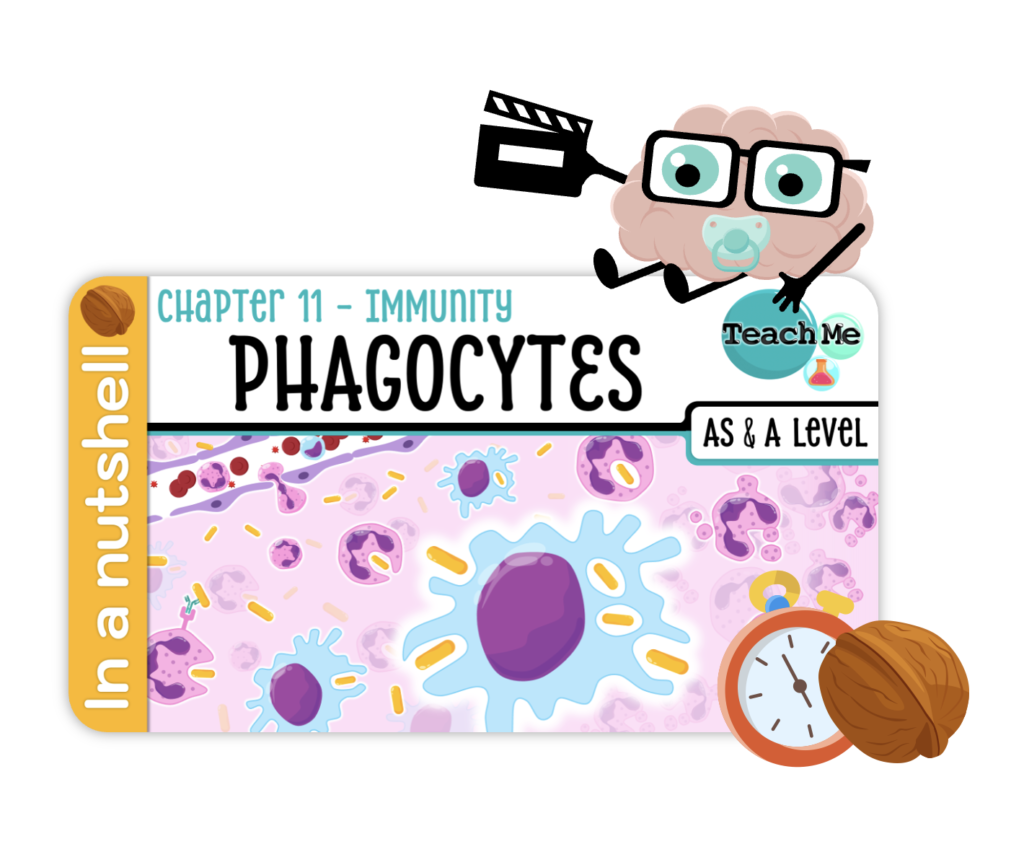
Your body has a hit squad. They don’t negotiate, they don’t ask questions, and they don’t leave leftovers. They find intruders, swallow them whole, and dissolve them in acid. And this is all happening inside you right now while you’re casually scrolling.
Welcome to phagocytes—the immune system’s most enthusiastic eaters. In this video, we’re covering:
- What They Are: White blood cells—neutrophils (fast, reckless first responders) and macrophages (big, patient, stick around to clean up). Both nonspecific: they’ll eat anything suspicious. No ID check, no trial.
- The Phagocytosis Process:
- Chemotaxis: Sniffs out chemical signals and moves toward the chaos. A microscopic bloodhound.
- Recognition & Attachment: Receptors bind antigens. Sometimes antibodies tag the pathogen first—basically a “FREE FOOD” sticker.
- Engulfing: Membrane wraps around the pathogen and swallows it whole. No chewing.
- Phagosome Formation: Pathogen trapped inside a vesicle—a cellular doggy bag.
- Lysosome Fusion: Lysosomes dump digestive enzymes. Acid. Enzymes. Death.
- Digestion & Antigen Presentation: Pathogen broken down, antigens displayed like trophies.
- The Neutrophil Sacrifice: Neutrophils go hard, then die. That’s what pus is. Dead neutrophils, dead bacteria, and regret. You’re welcome.
Phagocytes don’t get credit, but they keep you alive. Learn the process—before your exam asks you to describe it and you write “the cell eats the germ” and pray for partial marks.
TIMESTAMPS
STUDY RESOURCES
00:00 – Intro
00:15 – Overview Of This Video
00:52 – Brief Recap
02:57 – Neutrophils
07:28 – Chemotaxis
13:49 – Phagocytosis
23:19 – Monocytes & Macrophages
29:26 – Antigen Presentation
33:13 – Neutrophils V.S Macrophage
38:07 – Microscopes & Drawings
50:01 – Questions & Answers

Section 3 - Lymphocytes
LECTURE VIDEO
DESCRIPTION
Phagocytes will eat anything. They’re the immune system’s indiscriminate bouncers—effective, but not exactly clever. Lymphocytes? They’re the specialists. They know your enemy by name, keep a file on them, and remember them for decades. Slightly unsettling. Extremely useful.
Welcome to lymphocytes—the immune system’s most targeted, most dramatic, and most memory-obsessed defence force.
In this video, we’re covering:
- T Cells—The Cell-Mediated Crew: Mature in the thymus (hence the T—biology loves a lazy abbreviation). No antibodies here—they go cell-to-cell. Helper T cells are the generals – they don’t fight, they activate B cells and cytotoxic T cells and shout orders from the sidelines. Without them, the whole operation collapses. Cytotoxic T cells are the assassins – they punch holes in infected cells with perforin until they burst. No trial, no jury.
- B Cells—The Hitmen: Mature in the bone marrow. They produce antibodies—Y-shaped proteins that bind specific antigens like a lock and key. On activation, they become plasma cells (antibody factories, working themselves to death) and memory cells (the ones who never forget, and hold grudges for life).
- Clonal Selection & Expansion—The Glow-Up: An antigen binds to a matching B or T cell receptor, triggering rapid mitosis. One cell becomes thousands—all identical, all targeting the same threat. It’s a cloning montage, but make it immunity.
- The Primary vs. Secondary Response: First infection? Slow, dramatic, you feel awful. Second infection? Memory cells recognise the enemy instantly and obliterate it before symptoms even show. This is why vaccines work—and why you don’t get chickenpox twice. *
- Antigen Presentation—Show and Tell, But Deadly: Macrophages display antigens on their surface, helper T cells recognise them, and the whole immune system wakes up. It’s a wanted poster with a cellular audience.
Phagocytes eat first and ask never. Lymphocytes do their homework and remember your face. Learn the difference—before your exam asks about cell-mediated immunity and you accidentally describe a buffet.
TIMESTAMPS
STUDY RESOURCES
00:00:00 – Intro
00:00:15 – Overview Of This Video
00:01:01 – Quick Recap
00:06:14 – Origin & Maturation Of Lymphocytes
00:17:28 – The Lymphatic System
00:28:18 – Killer T Cells (Cytotoxic Cells)
00:38:49 – Helper T cells
00:44:14 – B Cells & Plasma Cells
00:49:02 – Antibody Structure
01:04:51 – Antibody Function
01:15:00 – Memory Cells
01:26:13 – Drawings & Microscope
01:34:40 – Antibodies V.S Antibiotics
01:40:37 – Summary Page
01:45:50 – Questions & Answers
01:55:44 – Outro

Section 4 - Active & Passive Immunity
LECTURE VIDEO
DESCRIPTION
Your immune system has two modes: earn protection yourself, or have it handed to you on a silver platter. One builds character; the other is legal academic cheating. And today, we’re also diving into the mad science of cloning antibodies.
In this video, we’re covering:
- Natural vs. Artificial Immunity: Active = your body does the heavy lifting (getting sick vs. getting a vaccine). Slow to start, but the memory lasts. Passive = borrowed antibodies (mother to baby, or antivenom). Instant protection, zero memory. You’re just renting an immune system for the weekend.
- Vaccines & Herd Immunity: How to stop a virus from spreading. It’s the ultimate biological group project—and yes, it only works if everyone actually does their part.
- The Hybridoma Method: Absolute mad science. Fuse a B cell (makes perfect antibodies but dies fast) with a myeloma cell (a tumor that lives forever). The result? An immortal, constantly dividing antibody factory. Like giving a skilled worker the Terminator’s exoskeleton.
- Monoclonal Antibodies (Mabs): Because they’re cloned, these are identical antibodies targeting one specific antigen. They’re the snipers of medicine—used in pregnancy tests and cancer treatments. No collateral damage, just pure, targeted biological warfare.
Earn your immunity or borrow it — just know the difference. Learn this—before your exam asks you to explain how to fuse a B cell with a tumor cell and you accidentally describe a horror movie.
TIMESTAMPS
STUDY RESOURCES
00:00:00 – Intro
00:00:15 – Overview Of This Video
00:01:05 – Active V.S Passive Overall
00:16:00 – Maternal & Fetal Antibodies
00:23:53 – Types Of Vaccines
00:35:33 – Vaccine Timing
00:41:53 – The REAL Purpose Of Vaccines
00:51:31 – Monoclonal Antibodies (mAbs)
00:56:20 – The Hybridoma Method
01:10:32 – mAbs In Diagnosis
01:17:55 – Blood Groups (Typing) & mAbs
01:29:12 – mAbs In Treatment
01:39:14 – Summary
01:41:17 – Questions & Answers

COMMENTS