
Chapter 7 - Transport In Plants
Section 1 - Plant Anatomy
LECTURE VIDEO
DESCRIPTION
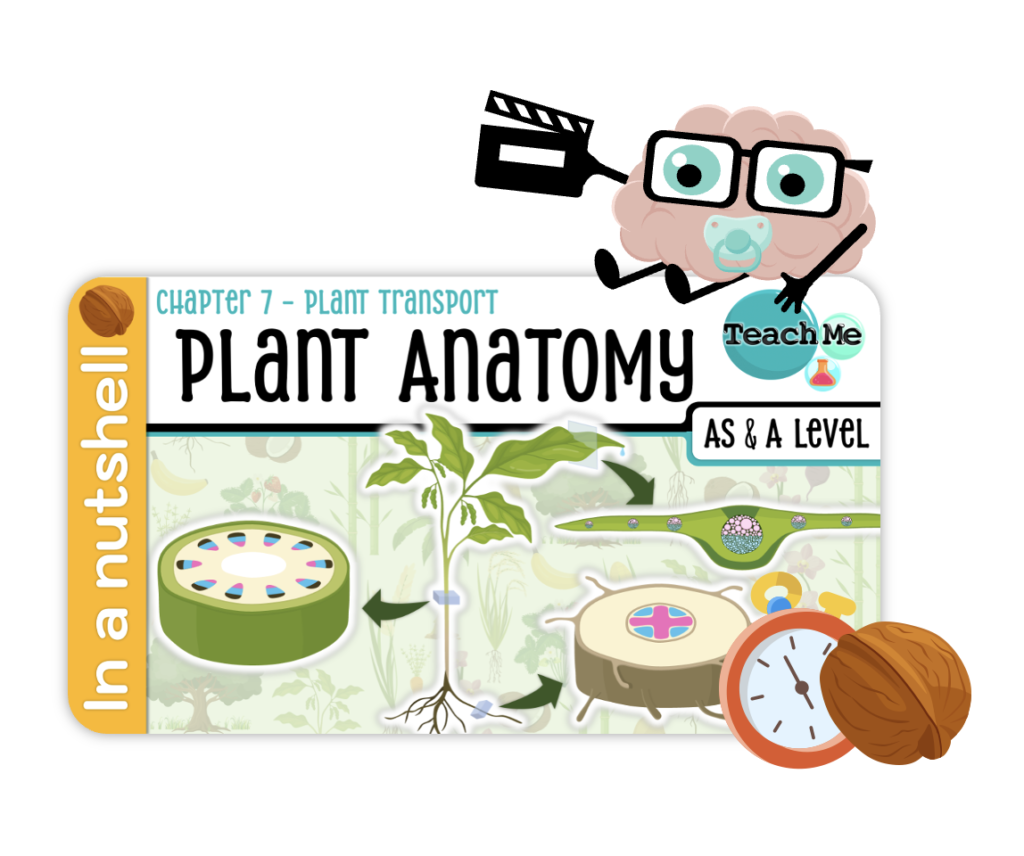
Congratulations. You’re about to dissect the quietest, most organised organisms on the planet—no brains, no movement, but an internal infrastructure that would make a civil engineer weep. And yes, you have to know all of it. Welcome to your A-Level tour of the dicot body plan—root, stem, and leaf, cut open and laid bare.
In this video, we’re covering:
- The Ground Tissue Trio: (1) Parenchyma: Thin-walled, alive, does everything—photosynthesis, storage, healing. The unsung hero. (2) Collenchyma: Unevenly thickened, alive, bends without breaking—the yoga instructor of plant tissues. (3) Sclerenchyma: Thick lignified walls, dead at maturity. No give, no compromise, no fun. The bouncer with anger issues.
- The Skin & The Gatekeeper: (1) Epidermis: Waxy, waterproof, first line of defence. (2) Endodermis: Root gatekeeper with the Casparian strip—a waxy checkpoint forcing everything through the membrane. No shortcuts, no VIP access.
- The Vascular Motorway: Xylem (dead pipes hauling water up) and Phloem (living tubes delivering sugars around). Arrangement depends on where you look—because plants love keeping you on your toes.
- Root: Star-shaped xylem in the centre with phloem squeezed between arms. Endodermis wrapped around, epidermis outside. Root hairs for that SA:V absorption—because we never escaped that ratio.
- Stem: Vascular bundles in a neat ring (very polite). Parenchyma fills the pith and cortex. Collenchyma under the epidermis for flexibility. Sclerenchyma for backbone.
- Leaf: Dorsiventral—upper palisade (chloroplast overachievers), lower spongy (air space slackers with purpose), stomata with dramatic guard cells, and veins with xylem on top, phloem below—because even plants have seating preferences.
Plants are organised and surprisingly savage. Learn their anatomy—before your exam asks you to identify a tissue and you label everything “leaf stuff” and hope for the best.
TIMESTAMPS
STUDY RESOURCES
00:00:00 – Intro
00:00:15 – Overview Of This Video
00:00:44 – The Ultimate Plant
00:06:06 – Plant V.S Animal
00:12:12 – Dicots V.S Monocots
00:20:23 – The Root Structures
00:30:57 – Microscope View Of Root
00:42:02 – How To Draw & NOT Draw
00:51:54 – The Stem Structures
01:05:32 – Microscope View Of Stem
01:15:43 – The Leaf Structures
01:22:02 – Microscope View Of Leaf
01:26:49 – A SEXY Summary
01:31:35 – Questions & Answers
01:37:25 – Outro

Section 2 - Root and Absorption
LECTURE VIDEO
DESCRIPTION
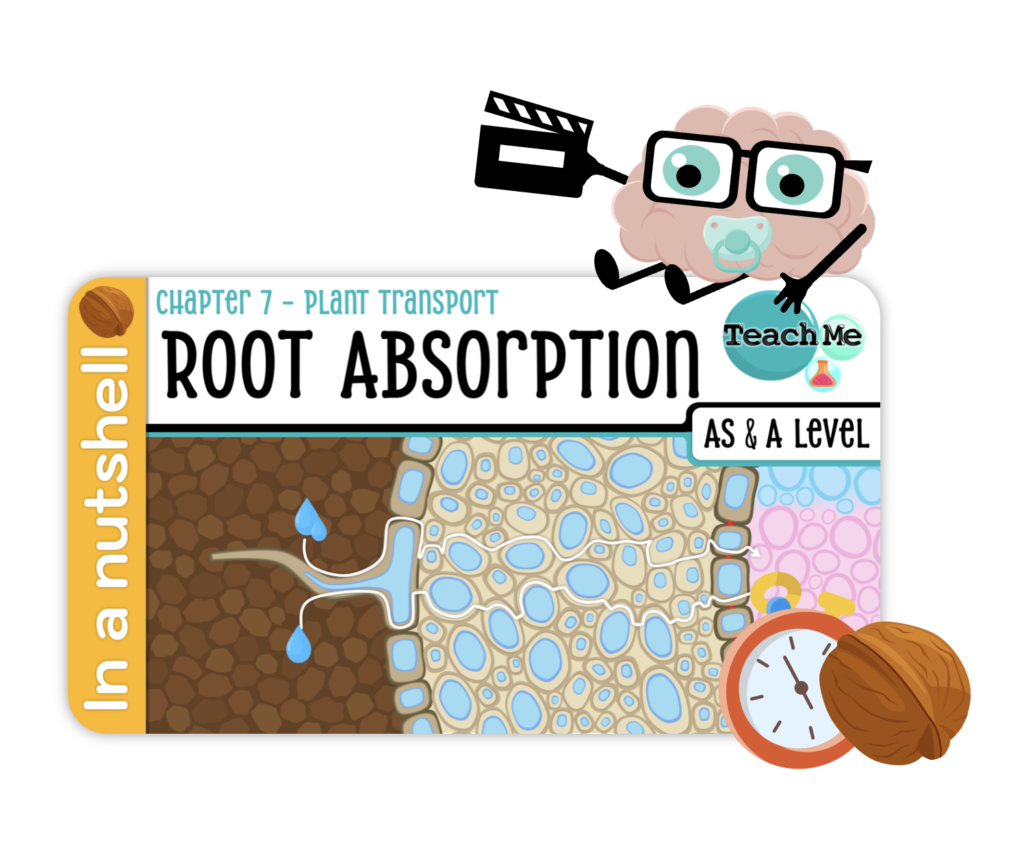
Ever wonder how a plant gets a drink without arms, legs, or a straw? Spoiler: it’s not magic—it’s a coordinated heist involving osmosis, ion channels, and a waxy checkpoint that takes its job way too seriously. Welcome to the underground world of root absorption, where water and minerals fight their way from the soil all the way to the xylem—and every step is an A-Level favourite.
In this video, we’re following the journey:
- The Soil Start: Minerals dissolved in water—because plants can’t exactly eat solid food. Root hairs do the heavy lifting, maxing out that SA:V ratio we all know and love.
- The Symplast vs. Apoplast Debate: Two pathways, one destination. Apoplast pathway – Water and ions slip through cell walls like they own the place. Fast, easy, no questions asked. Symplast pathway – The scenic route—through the cytoplasm via plasmodesmata. Slower, but necessary when things get serious.
- The Casparian Strip—The Gatekeeper: A waxy band in the endodermis that blocks the apoplast pathway dead in its tracks. No shortcuts, no VIP access—everything gets forced through the cell membrane. It’s the bouncer that actually does its job.
- Active Transport vs. Osmosis: Minerals go in via active transport (because the plant said so), water follows by osmosis (because water’s a follower). One requires energy, the other just goes with the flow.
- The Grand Finale—Into the Xylem: Water and minerals finally reach the xylem, ready to be hauled up the plant like a botanical elevator. Mission accomplished.
From soil to xylem, it’s a journey of drama, checkpoints, and cellular dedication. Master this pathway—and your A-Level exam won’t stand a chance.
TIMESTAMPS
STUDY RESOURCES
00:00:00 – Intro
00:00:15 – Overview Of This Video
00:01:00 – The BIG Picture
00:06:35 – The 3 Steps Of Absorption
00:12:38 – (1) Root Hair Cells Action
00:30:14 – (2) Parenchyma (Cortex) Transport
00:42:25 – (3) The Casparian Strip
00:57:42 – Why Water & Minerals?
01:05:23 – Questions & Answers
01:13:48 – Outro
Section 3 - Xylem & Transpiration
LECTURE VIDEO
DESCRIPTION
Plants can’t walk to the tap. They can’t ask for a drink. They just stand there, silently, while their entire survival depends on water defying gravity and climbing up a tube. No pressure—literally, that’s the whole mechanism.
Welcome to the dramatic world of xylem and transpiration—where physics, biology, and a whole lot of evaporation team up to keep plants alive.
In this video, we’re covering:
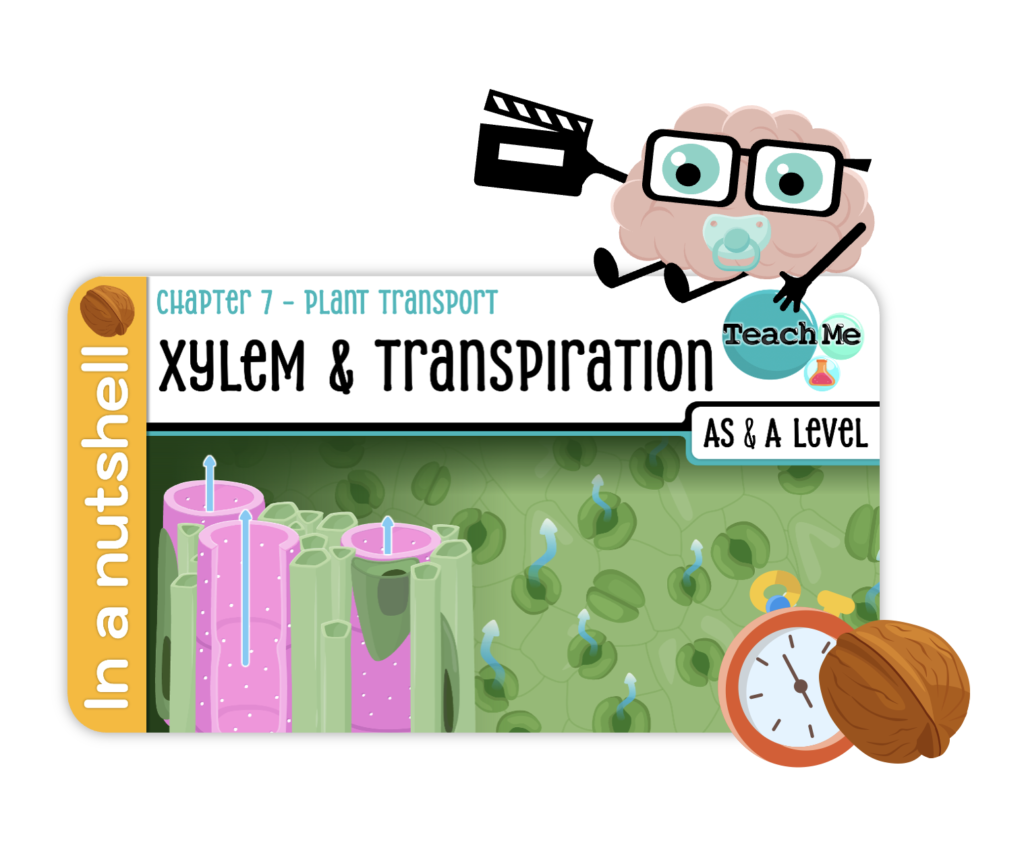
- Xylem Structure—Built for the Job: Dead, hollow, lignified tubes with no end walls. No cytoplasm, no organelles, no drama—just pure, efficient plumbing. It’s the one time being dead is actually an advantage. Pits let water move sideways, and lignin stops the whole thing from collapsing under pressure. Basically, xylem is the friend who does all the work and gets zero credit.
- Transpiration—The Evaporation Engine: Water evaporates from the leaves through stomata, creating tension that pulls water up the xylem like a straw. Yes, plants are sipping through the world’s tallest, thinnest straw—and they can’t even take credit for it. The atmosphere does all the heavy lifting.
- Factors Affecting Transpiration: Light intensity, temperature, humidity, wind speed—basically the weather forecast decides how thirsty your plant is. Hot, dry, windy day? Transpiration goes feral. Humid, still, dark? The plant chills. It’s basically a plant mood ring.
- Adaptations to Reduce Water Loss: Xerophytes (desert plants) with sunken stomata, thick cuticles, and rolled leaves. Because when you live in a desert, every drop counts—and looking dramatic while doing it is just a bonus. Cactus energy.
- Drawing What You See Under the Microscope: Clear continuous lines, correct proportions, ruler-straight labels. Draw what’s actually on the slide—not a cartoon. Shading is banned, and if your root hair looks like a stick figure, we need to have a serious talk.
Plants are silent, stationary, and secretly running one of the most efficient transport systems on Earth. Learn it—before your exam asks about transpiration and you accidentally describe a group hug.
TIMESTAMPS
STUDY RESOURCES
00:00:00 – Intro
00:00:15 – Overview Of This Video
00:01:09 – The BIG Picture
00:05:49 – Xylem Tissue Structure
00:21:23 – Formation Of A Xylem Vessel
00:32:25 – Xylem & Microscope
00:39:01 – Why Plants NEED A Transport System
00:46:32 – Xylem Transport
00:58:27 – Leaf Structures & Transpiration
01:15:52 – Water Movement Through A Leaf
01:26:28 – Leaf & Microscope
01:30:16 – Rate Of Transpiration
01:41:59 – Xerophytes & Adaptations
01:54:14 – Drawings
02:04:34 – Questions & Answers
02:10:49 – Outro

Section 4 - Phloem & Translocation
LECTURE VIDEO
DESCRIPTION
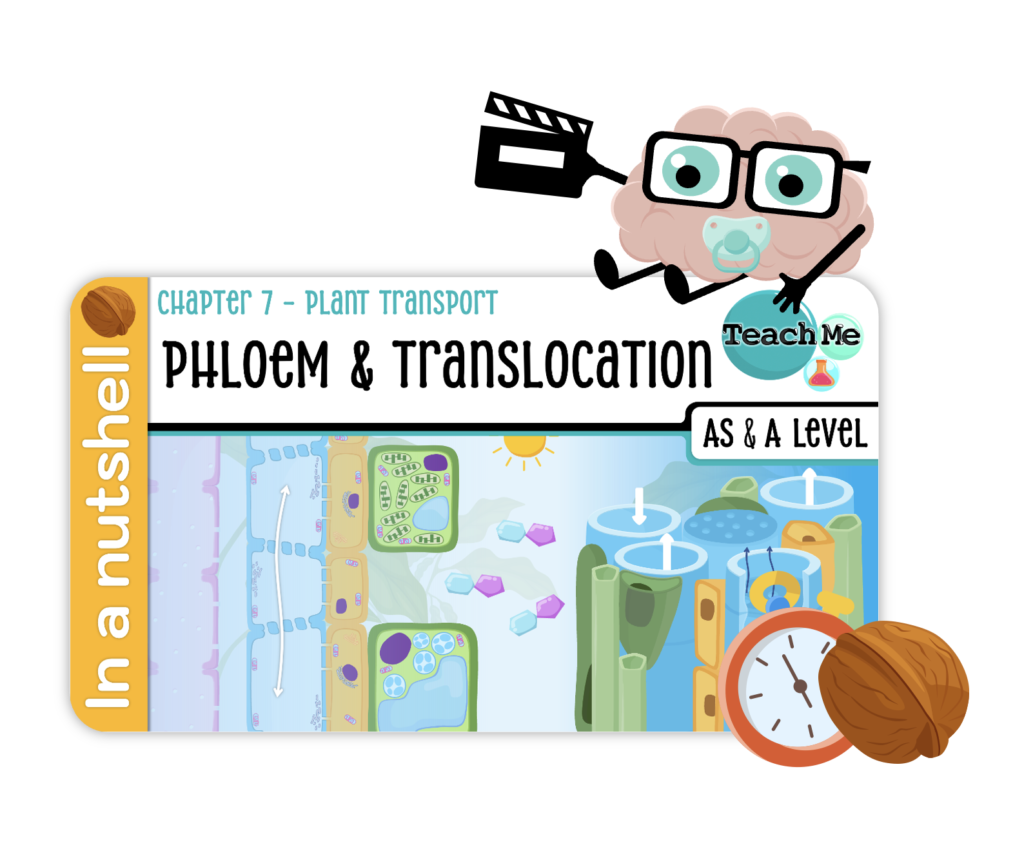
Xylem gets all the glory—hauling water, defying gravity, being dramatic. Meanwhile, phloem is quietly running the plant’s entire delivery network, shipping sugars to every cell that needs them. No appreciation. No credit. Just vibes and sucrose.
Welcome to the world of translocation—where plants move their food around like a courier service that never sleeps, never complains, and never loses a package.
In this video, we’re covering:
- Sieve Tube Structure—Built for Delivery: Living cells with sieve plates (yes, they have holes—that’s the point) and no nucleus at maturity. They gave up their DNA just to deliver your glucose. Respect the hustle.
- Companion Cells—The Real MVPs: They keep the sieve tubes alive, load the sugars, and handle all the logistics. Without them, phloem would be a dead tube of nothing. They’re the assistant who does everything while the boss gets the credit.
- Translocation—The Movement of Sugars: Sugars travel from source (where they’re made—usually leaves) to sink (where they’re needed—roots, fruits, growing shoots). It’s like Uber Eats, except the driver is a tube of cytoplasm and the passenger is sucrose. No tips required.
- The Pressure Flow Hypothesis: The A-Level classic. Sugars load into the phloem at the source, water follows by osmosis, pressure builds, and the whole thing flows to the sink where sugars unload. It’s basically a water slide powered by sugar. Physics doing biology’s dirty work.
- Source vs. Sink—It’s Complicated: A source can become a sink. A sink can become a source. It depends on the season, the plant’s needs, and frankly, its mood. Storage organs switch roles like a teenager changing personality. Keep up.
- Drawing Phloem Under the Microscope: Sieve plates, companion cells, no shading, ruler-straight labels. If your sieve tube looks like a ladder with commitment issues, we need to talk.
Phloem doesn’t get the fame, but it keeps the plant fed. Learn it—before your exam asks about source and sink and you accidentally describe a kitchen renovation.
TIMESTAMPS
STUDY RESOURCES
00:00:00 – Intro
00:00:15 – Overview Of This Video
00:00:55 – The BIG Picture
00:04:34 – Phloem Tissue Structures
00:21:31 – Sieve Tube & Companion Cell
00:31:30 – Assimilates
00:37:49 – Phloem Transport
00:55:52 – Sucrose Loading Details
01:06:08 – Source & Sink
01:10:40 – Microscopes & Drawings
01:21:48 – Xylem V.S Phloem
01:27:46 – Summary Pages
01:32:33 – Questions & Answers
01:39:30 – Outro
COMMENTS