Chapter 6 - Nucleic Acids & Protein Synthesis
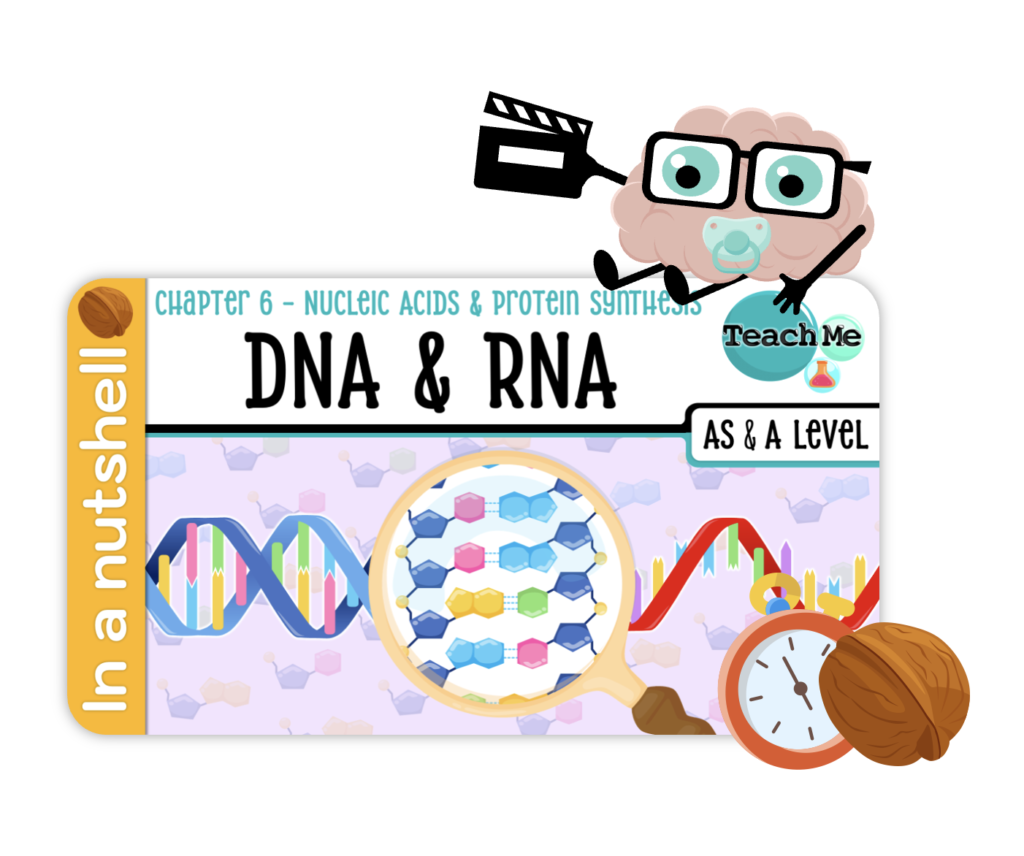
Section 1 - DNA & RNA Structure
LECTURE VIDEO
DESCRIPTION
Forget everything you know about “simple” blueprints. DNA is the original, 3-billion-year-old instruction manual for a DIY project that is you—and it’s written in a language so secret that the cell needs three different translators (hi, RNA!) just to get the job done.
This video dives into the world of genetic information, where the molecules are fragile, the pairing rules are strict, and one molecule (ATP) acts as the cash that pays for the whole chaotic operation. This video unpacks the central dogma of biology (with attitude) to explain:
- The Nucleotide: The building block with a sugar, a phosphate, and a nitrogenous base. It’s the only Lego brick that can also write a novel.
- DNA (The Double Helix): Why two strands? Data backup. We cover the anti-parallel rails and the strict dating rules: A with T, G with C. No exceptions. No drama.
- RNA (The Underpaid Interns): DNA is the boss who stays in the office. RNA does the actual work.
- mRNA (Messenger): The photocopy of the master plan. Gets destroyed immediately after use. Harsh.
- tRNA (Transfer): The clover-shaped delivery truck that hauls amino acids. It’s the literal translator.
- rRNA (Ribosomal): The muscle. Part scaffold, part enzyme. It actually builds the protein.
- The Genetic Code: UGG always means Tryptophan. Always. Bacteria, blue whale, or human—same code. Proof we’re all just different hacks of the same source code.
- ATP (The Cellular Energy Drink): Three phosphates = fully charged battery. Snip one off? Boom. Energy. It’s the only currency the cell accepts.
- Watson, Crick & The Math Guy): In 1953, Watson and Crick dropped into a pub and announced they’d solved DNA (humble brag). But they stood on the shoulders of Erwin Chargaff, who noticed that no matter the species—human, mushroom, or whale—A always equals T, and G always equals C. Chargaff’s Rule is why DNA zips up perfectly. Thanks, Erwin. You’re the real MVP.
Understand how your cells store the instructions for you, how they read them without ripping the pages, and what pays for the whole mind-blowing process.
TIMESTAMPS
STUDY RESOURCES
00:00:00 – Intro
00:00:12 – Overview Of This Video
00:01:09 – Levels Of An Organism
00:06:36 – What Are Nucleic Acids?
00:20:36 – DNA Function: The Biological Code
00:29:12 – DNA Structure
01:06:17 – How To Draw (on the test)
01:09:50 – RNA Structure
01:21:44 – ATP
01:26:08 – DNA V.S RNA
01:28:34 – Chargaff’s Rule
01:32:13 – Watson & Crick
01:35:55 – Questions & Answers
01:40:08 – Outro
Section 2 - DNA Replication
LECTURE VIDEO
DESCRIPTION
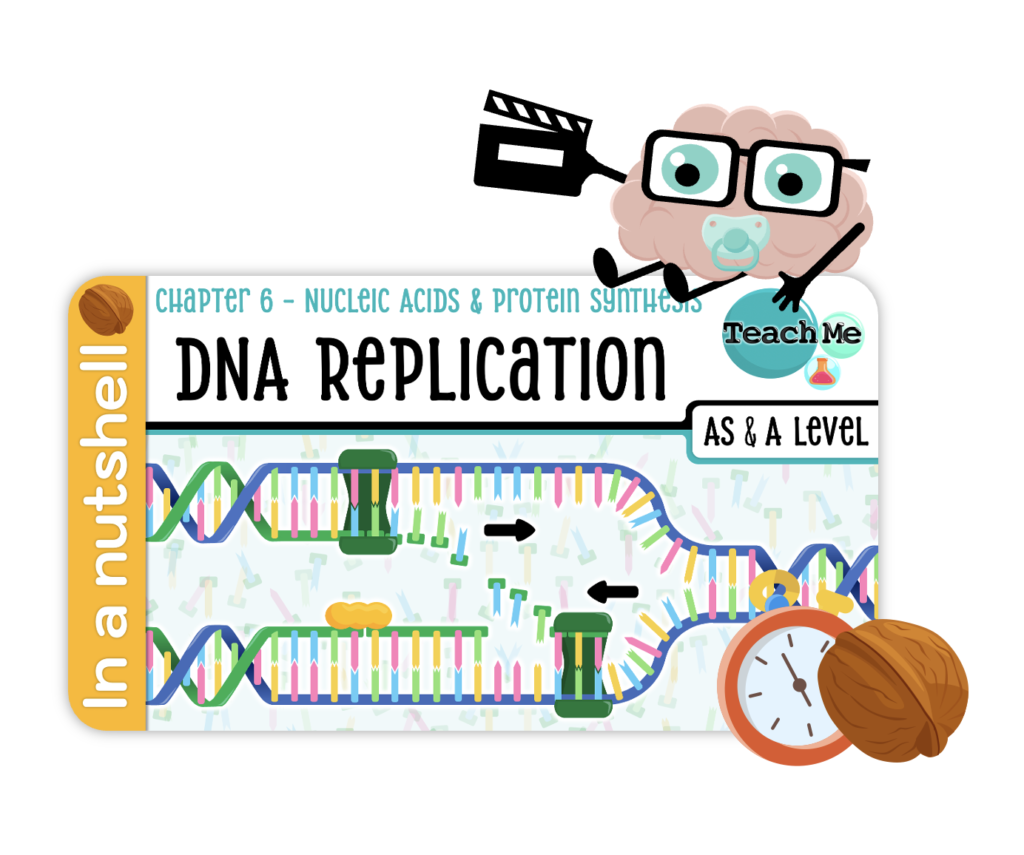
Imagine copying the entire Harry Potter series by hand. Perfectly. Millions of times. Without spellcheck. That’s your DNA every time a cell divides. And honestly? It nails it.
Watch the cellular photocopier in action:
- Semiconservative Replication: The genius move. Each new DNA molecule keeps one original strand and builds one new one. It’s not reinventing the wheel—it’s just making a really good twin.
- DNA Polymerase: The Builder – Slides along the separated strands, reading the template and bringing in the matching bases. A pairs with T. C pairs with G. It’s not complicated—it’s just loyal.
- Ligase: The finisher. Seals those Okazaki fragments into one continuous strand. Also fixes any nicks left behind. It’s the glue guy. The closer. The reason everything actually holds together.
- Leading vs. Lagging Strand: One faces the fork and gets built continuous and smooth—the favourite child. The other faces away and gets built in awkward, stuttered chunks called Okazaki fragments. It’s fine. No bitterness.
Understand the simple, elegant, ridiculously reliable system that lets you grow, heal, and exist—one perfectly paired base at a time.
TIMESTAMPS
STUDY RESOURCES
00:00 – Intro
00:15 – Overview Of This Video
00:55 – WHAT, WHEN, WHY?
09:35 – Recap Of DNA Structure
14:29 – Semi Conservative
17:15 – Initiation Of DNA Replication
19:18 – Leading & Lagging Strand [DNA Replication]
29:16 – Brief Summary [DNA Replication]
30:57 – Questions & Answers
35:48 – Outro
Section 3 - Protein Synthesis
LECTURE VIDEO
DESCRIPTION
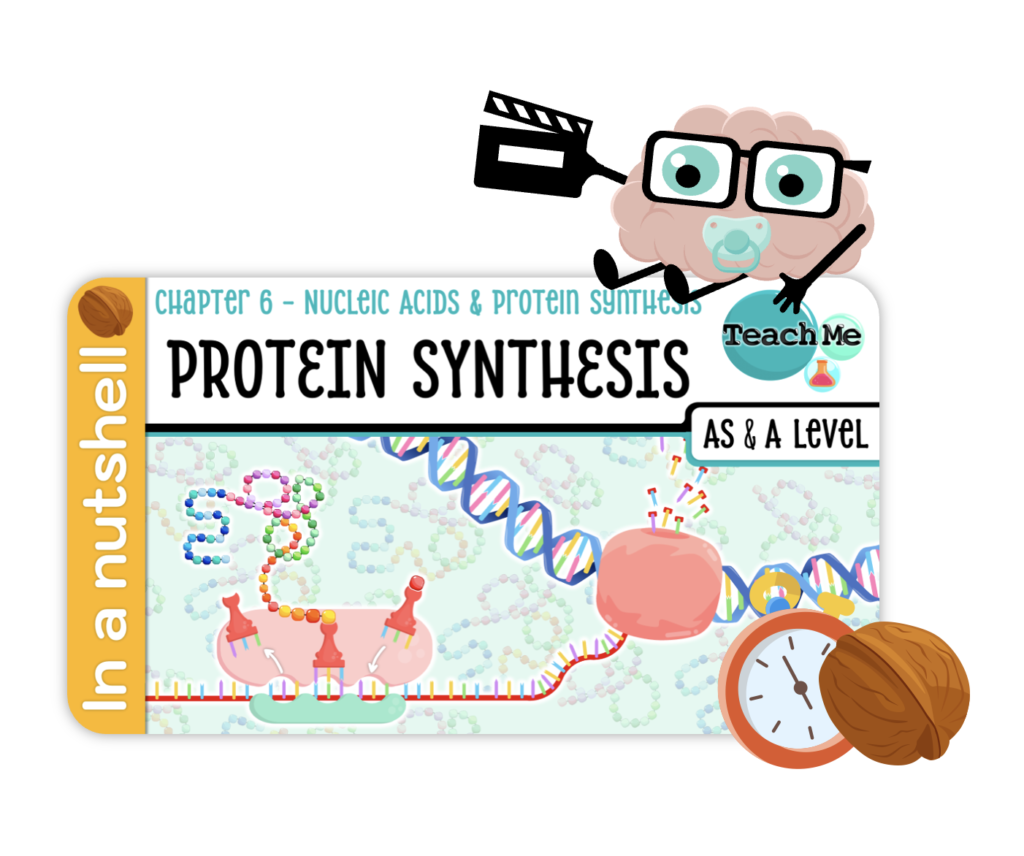
Imagine a chef who never sees the recipe, speaks three languages badly, and still makes a perfect soufflé every time. That’s your cells.
- Transcription: DNA copies a single gene onto pre-mRNA. The mRNA then sneaks out of the nucleus like a kid escaping chores—but first, it needs a disguise.
- Post-Transcriptional Modification: The cell snips out the useless bits (introns) and stitches together the good parts (exons). Think of it as editing a rough draft, adding a fake mustache and a trench coat, then calling it ready for action.
- Translation: Ribosome reads the finished mRNA three letters at a time. tRNA shows up with the right amino acid, every single time. No tip. No thanks. Just delivery.
- The punchline: Those amino acids snap into a chain. Chain folds into a 3D shape. If it folds wrong? Useless. If it folds right? Congrats—you just made a protein. Muscles, hormones, eyeballs—all from a molecular Lego set you never knew you had.
Your body builds things more reliably than Amazon ships them. And it never complains about IKEA instructions.
TIMESTAMPS
STUDY RESOURCES
00:00:00 – Intro
00:00:15 – Overview Of This Video
00:01:00 – BOB The Builder Analogy
00:09:22 – DNA Is A Code
00:17:18 – Transcription
00:38:27 – Post Transcriptional Modification
00:44:55 – Translation
01:05:57 – Summary Pages
01:10:45 – Questions & Answers
01:24:23 – Outro
Section 4 - Mutations
LECTURE VIDEO
DESCRIPTION
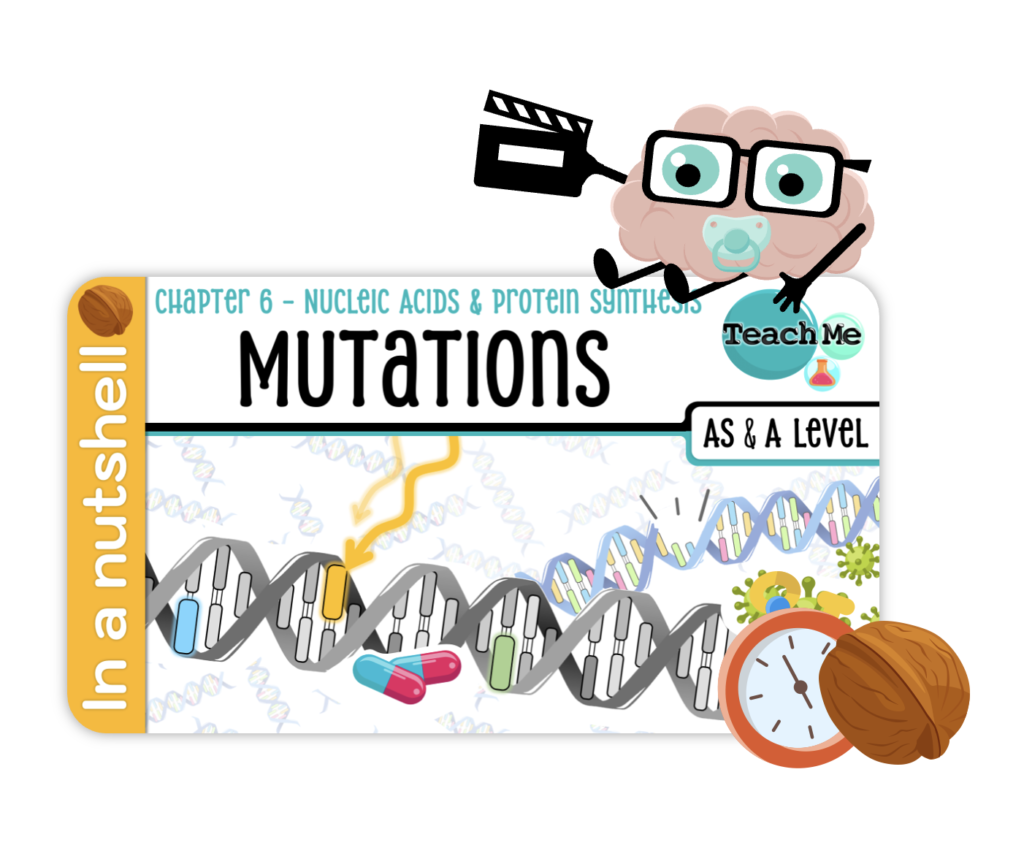
Your DNA is a 3-billion-letter instruction manual. Sometimes, your cells copy it perfectly. Sometimes, they slip. A missing/extra letter here, a swapped base there. That’s a mutation. Sometimes it’s harmless. Sometimes it’s devastating. Sometimes it gives you superpowers (okay, brown eyes).
But the real question is: does the typo die with you, or do your kids inherit your genetic oopsie? Time to embrace the typos of life:
POINT MUTATIONS: One Rogue Letter
- Substitution –One base swapped for another. Like typing “the Sad cat” instead of “the Bat cat.” Might change nothing (silent). Might swap one amino acid (missense). Might yell “STOP” mid-sentence (nonsense). Awkward either way.
- Insertion/Deletion – Add or lose a single letter. Now EVERYTHING after is gibberish. “the sad cat” becomes “ath esa dca.” Reading frame? Destroyed. Protein? Trash.
CAUSES: Who Keeps Hitting Caps Lock?
- Spontaneous –DNA polymerase just had a bad day. No external cause. Cellular oopsie.
- Mutagens –The external troublemakers. Radiation (UV, gamma) = physical violence. Chemicals (benzene, mustard gas) = molecular sabotage. Viruses = shoving foreign DNA where it doesn’t belong.
CONSEQUENCES: Good, Bad, or Meh?
- Silent –Mutation happened. Amino acid didn’t change. DNA got spicy for absolutely no reason.
- Missense –Wrong amino acid. Sometimes fine. Sometimes sickle cell anemia. Depends on the swap.
- Nonsense –Premature stop codon. Protein gets cut off mid-construction. Incomplete. Useless. Tragic.
- Frameshift –Everything after is nonsense. Protein looks like it was assembled by a toddler.
- Beneficial Mutations –Rare, but real. Lactose tolerance? Mutation. HIV resistance? Mutation. Your ancestors got lucky. You’re welcome.
Understand the typos, rearrangements, and biochemical oopsies that drive evolution, cause disease, and occasionally let adults drink milk. Mistakes aren’t always bad—sometimes they’re just edits. But maybe don’t make them in your germ cells.
TIMESTAMPS
STUDY RESOURCES
00:00 – Intro
00:15 – Overview Of This Video
01:03 – The BIG Picture
10:38 – Base Substitution Mutations
20:25 – Sickle Cell Anemia
28:37 – Insertion & Deletion Mutations
29:59 – Frameshift Mutations
34:34 – Good, Bad, or Neutral?
36:49 – Causes Of Mutations
41:27 – Questions & Answers
46:46 – Outro
COMMENTS